
Things to do in Duolun
Explore top experiences
Top 10 attractions in Duolun

Huizong Temple
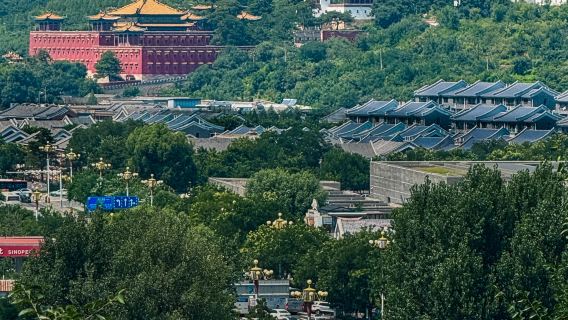
The Huizong Temple was built in the 30th year of Emperor Kangxi (1691 AD). Under the instigation of Tsarist Russia, Kaerdan, the leader of the Junggar Department of Moxierut, boldly attacked Monan. In 1690, Emperor Kangxi defeated Galdan. In the following year, Kangxi went to Duolunuoer to meet with the three tribes of Khalkha in Mobei and Taiji, the Mongolian prince of the 48th Banner in Monan, known as the "Duolunhui League" in history. Kangxi agreed to the request of "wish to build a temple to honor the grand ceremony" and began to build the "Huizong Temple".Duolun · 438m from downtown


National Museum of China
The National Museum of China is an institution that, on behalf of the country, collects, studies, displays and interprets representative material evidence that fully reflects China's fine traditional culture and advanced socialist culture. It is a national palace of history, culture and art and a cultural living room. The National Museum of China currently has more than 1.4 million collections, covering ancient cultural relics, modern and contemporary cultural relics, rare books and ancient books, and artworks. Among them, there are 815,000 pieces (sets) of ancient cultural relics, 340,000 pieces (sets) of modern and contemporary cultural relics, more than 240,000 pieces (volumes) of rare books and ancient books, and a total of nearly 6,000 first-class cultural relics. In recent years, especially since the 19th National Congress of the Communist Party of China, the National Museum of China has increased its efforts to collect representative material evidence reflecting contemporary advanced culture, and publicly collected cultural relics collections from the society, collecting an average of about 50 sets of ancient cultural relics and more than 1,000 sets of modern and contemporary cultural relics, physical objects and artworks each year. The exhibitions of the National Museum of China include three series: basic exhibitions, special exhibitions, and temporary exhibitions, forming a three-dimensional exhibition system covering theme exhibitions, basic exhibitions, special exhibitions, and temporary exhibitions. Among them, "Ancient China", "Road to Rejuvenation" and "Road to Rejuvenation in the New Era" are the basic exhibitions of the National Museum, and are also important positions for promoting Chinese traditional culture, advanced socialist culture, and cultivating and practicing the core socialist values. The special exhibitions are mainly based on the collection of cultural relics, including more than ten special exhibitions such as ancient Chinese bronzes, Buddhist statues, jades, porcelains, modern classic works of art, and African wood carvings. Temporary exhibitions include two categories: self-planned exhibitions and introduced exchange exhibitions, covering historical culture, fine cultural relics, archaeological discoveries, classic works of art, regional culture, international exchanges and other aspects, with an average of more than 40 exhibitions held each year. The National Museum of China has rich research resources, a solid research foundation and strong research capabilities, and is the industry leader in the development of the domestic museum industry. Since 2018, in accordance with the principle of "not seeking to collect but to exhibit, open cooperation, mutual benefit and win-win", we have established strategic cooperative relations with many cultural and museum institutions, institutes, universities and colleges at home and abroad, jointly carried out academic research, held high-quality cultural relics exhibitions, convened seminars, launched postdoctoral research workstations, and took the lead in establishing two international organizations, the BRICS Museum Alliance and the Silk Road Museum Alliance, striving to play a greater role and make greater contributions in promoting the core socialist values, enhancing cultural confidence, promoting exchanges and mutual learning between Chinese and foreign civilizations, and building a socialist cultural power.China · Beijing

Sun Park
Chaoyang Park is found in Beijing's East Fourth Ring. The park is enclosed with lakes, trees, pavilions, and European castles. The environment is a beautiful sight to behold. There are also numerous children's play programs in the park, ideal for relaxing strolls and staying busy. There are several lakes connected to the park. Each lake has a boat dock and you can rent a boat to ride at any of them.China · Beijing

Shichahai Scenic Area
Shichahai Scenic Area refers to the front sea,Shichahai Scenic AreaAlong with the three lakes of Xihai and the adjacent areas, this place boasts vast stretches of beautiful lake surfaces and is also a famous historical district in Beijing, where numerous former residences of celebrities, princely mansions, and other historical sites are scattered, along with various delicacies close to the lives of ordinary people,Shichahai Scenic Area pub streetIt is also a long-standing hotspot for nightlife in the capital. Take a cruise in summer In summer, the lake is covered with lotus flowers. Cruise docks like the lotus market, wild duck island, and dreamlike Jiangnan line the shore, offering pedal boats and electric boats for self-rowing fun. Traditional punt boats are operated by boatmen in period costumes, who share old Beijing stories along the way. Ice skating on the lake in winter In winter when the lake freezes over, cruises stop operating, but you can still come to enjoy the winter scenery. Once the ice is solid, the Qianhai ice rink opens, offering skating and ice biking, a long-standing winter tradition in Beijing. Visit ancient architecture The ancient architecture around Shichahai Scenic Area keeps the attraction full of old Beijing characteristics. There areHuitong Temple, Deshengmen Arrow Tower, Prince Chun's Mansion,Guanghua Temple, Yinding Bridge, Bell and Drum Towers, and other attractions. Among the most famous is the residence of Heshen on Qianhai West Street—the Prince Gong Mansion. In addition to marveling at the lavish home of the corrupt Qing official Heshen, the mansion also houses over 10,000 hidden "fu" characters. The Kangxi Emperor's inscribed fu stele is particularly renowned, drawing travelers to queue for hours just to catch a glimpse. If interested, you can also detour to Yandai Byway to visit the Great Qing Post Office, which marks the birth of modern postal service in China. You can stamp a few beautifully patterned postmarks as souvenirs at the post office, though you'll need to purchase their postcards first to get the stamps. Try old Beijing snacks If you like to casually snack, you can buy a candied hawthorn stick, lean against the white marble railing of Shichahai Scenic Area, and enjoy the cruise boats coming and going on the lake while eating. If you want to specifically seek out Beijing snacks, you can go toJiumen snacks, in the traditional courtyard houses, you can find everything from soy-braised beef, dalian huoshao (a type of pancake), instant-boiled mutton, to tofu pudding; or head to the west side of the Mei Lanfang Memorial HouseHuguo Temple snack street, tube-shaped wings, palace cheese, and shoe sole pancakes, taste the delicious flavors from the hutong; additionally, there's a shop in the Lotus MarketQuanjude roast duck restaurant. Bars and nightlife When night falls, the lively time arrives. Around the Shichahai Scenic Area, numerous bars echo with singing, and some bar singers in the Shichahai Scenic Area truly perform well, with stories of the "Beijing drifters" behind the bars. Rock singer Dou Wei performed at the Shichahai Scenic Area for three years, and it is said that the restaurant Qingyunlou (Shichahai branch) in the Shichahai Scenic Area is now owned by him. Other famous bars include Hutong Sketch and Jiadingfang. Sitting in a bar, watching singers perform, you can almost hear the passion for music from the "Beijing drifters" in their songs. Nearby attractions Shichahai Scenic Area is adjacent to Nanluoguxiang to the east and Beihai Park to the south, with Jingshan Park, the Palace Museum, and Tiananmen Square a bit further south also within easy reach. Typically, visitors explore the Palace Museum or Tiananmen Square during the day and unwind at the bars in Shichahai Scenic Area in the evening. For those who prefer lakeside views over the Palace Museum or Tiananmen Square, combining a visit to Beihai Park with Shichahai Scenic Area is ideal. If shopping and sampling snacks are more appealing, one can head to nearby Nanluoguxiang after exploring Shichahai Scenic Area.China · Beijing

Tiananmen Square
Tiananmen Square is located in the center of Beijing, with a length of 880 meters from north to south and a width of 500 meters from east to west, covering an area of 440,000 square meters. It can accommodate up to one million people for grand gatherings. Along the central axis of Beijing, there are the national flagpole, the Monument to the People's Heroes, the Chairman Mao Memorial Hall, and the Zhengyang Gate Tower standing from north to south in the square. On October 1, 1949, the founding ceremony of the Central People's Government of the People's Republic of China was held in Tiananmen Square, marking the birth of the People's Republic of China. From then on, a new chapter in Chinese history was opened. On the day of the founding ceremony, 300,000 military and civilian personnel gathered in Tiananmen Square. Since then, Tiananmen Square has become an important venue for the Party and the state to hold major celebrations, grand gatherings, and foreign affairs receptions.China · Beijing

Thaiwoo Resort
Overall introduction Thaiwoo Resort is nestled among the mountains in Chongli District, Zhangjiakou City, Hebei Province. It is a year-round mountain resort with a North American style, offering skiing in winter and a summer retreat. It is conveniently accessible from Beijing by high-speed rail or self-drive. The main peak of Chongli, Yushi Liang, is located within the ski area, with a summit elevation of over 2,100 m. The valley is densely forested, making it one of the well-known ski resorts near Beijing. The resort was developed by Chongli Thaiwoo Tourism Resort Co., Ltd., with a total land area of 40 km² and an investment exceeding CNY 20 billion. It is currently one of the largest comprehensive ski resorts in China. The "Dancing Runner" course has hosted the FIS Freestyle Ski World Cup Moguls event for four consecutive years. As a year-round ski resort in China, it has established strategic partnerships with globally renowned brands such as Club Med, Westin, and HYTT. Venue advantage √ World ski golden belt The mountainous region between 40-50° north latitude is recognized as the "world ski golden belt". √ 2022 event core area In 2022, the Zhangjiakou competition zone will feature six major events, including cross-country skiing, Nordic combined, and biathlon. √ A year-round resort ski town in full operation: ski in winter and spring, outdoor activities in summer, and enjoy the scenery in fall. √ The beginner ski area is very large; √ A ski town introducing international hotel management brands, including Hyatt, Marriott, PVCP, and more; √ A ski town that hosts international A-level ski competitions; √ A ski town that introduced Starbucks coffee; √ Hosting a super large snow music festival, the Cool Snow Music Festival co-organized with BTV for the New Year's Eve gala attracted nearly 10,000 live audience members. On the evening of December 31, the topic interaction on Weibo reached 530 million. Winter piste map Taiwu ski resort covers a total area of 400 hectares, with approximately 200 planned ski runs totaling 138 km in length. The resort plans to have 45 lifts and 21 magic carpets, with a total length of 38.23 km. Currently, the town has built 31 ski runs, with beginner, intermediate, and advanced runs in a 3:4:3 ratio. The total length is 30 km, with snowmaking covering about 80 hectares. There are 6 high-speed cable cars and 13 magic carpets. The ski runs are named after dances like rumba, waltz, and tango, drawing inspiration from their rhythmic and artistic qualities to give the town a unique charm. Taiwu Rave Park The rave park, jointly created by Taiwu and the Swiss Helvepark team, was designed by Marcel Brunisholz (known for designing SkasFee, Zermatt Adelboden), bringing a refreshing Swiss style to ski enthusiasts. The terrain park features all the traditional elements, including kickers of various sizes, rails, boxes, and other features, catering to freestyle players of all skill levels. Summer outdoor map In summer, Taiwu is 8–12°C cooler than Beijing. Its lush forests serve as a natural oxygen bar and outdoor sports venue. Here you'll find a variety of outdoor activities: mountain biking, orienteering, ATV riding, hiking, go-karting, mountain golf, and luge. Thaiwoo life Stay at Thaiwoo Local food, coexisting with scenic views Taifu features 17 distinctive restaurants: Alpine hut, 2160 restaurant, Summit view restaurant, Hui cui restaurant, Peach izakaya, White mountain blue tile, Sanchuan hot pot, Taifu craft brewery, Lu coffee, Columba kids restaurant, Yuan shan, Big talk lounge, Fun hall, Yi hot pot, Yuewu skewers, KFC, Starbucks coffee. Shop at Thaiwoo North American style commercial street, gathering international first-tier brands: Salomon, Arc'teryx, Patagonia, Burton, Nobaday, Bogner, Millet, Suunto, Spider, Smartwool, Tonisailor, Kjus, Kessler, Electric, Head, Halti, Leki, Lowa, Northland, Vauhti, Level, Phenix, Rossignol...... Recreation Phoebe mini theater/Yichi hot spring/May 4th club/Time KTVChina · Zhangjiakou

Natural History Museum of China
The Natural History Museum of China is a large-scale natural history museum built by the People's Republic of China relying on its own strength. Its predecessor is the "Beijing Natural History Museum," which remains in many people's memories, and it houses hundreds of thousands of specimens. The museum's dozen or so permanent exhibition halls follow the thread of biological evolution, telling the story from the ancient oceans all the way to humanity itself; walking through them is like flipping through a three-dimensional history of life on Earth. The "Rise of Vertebrates" exhibition hall in the center of the first floor was upgraded from the original "Ancient Reptiles" hall: a Mamenchisaurus jingyanensis skeleton over 20 meters long almost spans the entire hall, with the Lufengosaurus huenei, independently excavated and researched by Chinese scientists, standing nearby, alongside groups of Szechuanosaurus, Tuojiangosaurus, and others. In the adjacent Ancient Mammals hall, a mammoth skeleton is displayed in the center, while the "Juramaia," an early eutherian mammal the size of a mouse, bears witness to the origins of mammals. The "Plant World" on the second floor brings together thousands of plant fossils and modern plant specimens, with the "Liaoning ancient fruit," an angiosperm fossil from over 100 million years ago, being a star attraction. The "Yellow River elephant" (Stegodon zdanskyi) fossil, which is featured in elementary school textbooks, is also a widely known treasure of the museum's collection. The "Dinosaur Park" on the basement level is now an immersive experience project called "Escape from the Dinosaur's Mouth": centered around characters like Sinoceratops, Tarbosaurus, and Confuciusornis, it brings together over 20 types of native Chinese dinosaurs such as Sinosauropteryx, Microraptor, and Psittacosaurus. With full CG imagery and naked-eye 3D technology as a foundation, 6D motion seats combined with water mist, wind effects, and vibrations, plus a live-action mechanical Tarbosaurus beast, the approximately half-hour Cretaceous adventure is especially popular with children. The Aquatic Life Hall is one of the few live exhibition areas in the museum, where schools of live aquatic creatures swim in the shark pool and underwater tunnel. "Amazing Africa" uses a 360-degree panoramic painting to recreate the African wilderness, with the necks of ancient giraffes and modern giraffes displayed side by side, making the answer to evolution clear at a glance. The "Origin of Humans" exhibition hall, hidden on the basement level, is in an inconspicuous location but is worth seeing as a grand finale: "Lucy," the Australopithecus from over 3 million years ago, the "Nariokotome Boy" from 1.6 million years ago, and Neanderthals from tens of thousands of years ago appear in sequence. Millions of years of human evolutionary history are condensed into hundreds of specimens, and a complete human nervous system specimen is particularly unforgettable. Families with children can stop by "Animals—Friends of Humans" to see specimens of polar animals like polar bears and the lively Insect Hall. The museum's "Discovery Corner" also hosts hands-on experiments and nature-themed craft activities all year round. When visiting, you might want to follow the order of the first-floor paleontology, second-floor plants and African grasslands, and basement-level dinosaur park and "Origin of Humans," viewing the story of life all the way from ancient times to ourselves.China · Beijing

Qianmen Street
Qianmen Street is located in the southern part of downtown Beijing and has been a famous commercial district since ancient times. Today, it features numerous restaurants, shops, and local snacks from across China, making it ideal for shopping and dining. The street's historic architecture, adorned with traditional archways, vintage signs, and red lanterns, perfectly captures old Beijing's charm. Travel route Most visitors explore the pedestrian street section, which spans approx. 800m from Zhengyangmen-Archer Tower in the north to Zhushikou East Street in the south. This area is perfect for walking and sightseeing. Additionally, you can ride the sightseeing tram along the pedestrian street. This vintage tram, known as the Ding Ding Car, has a rich history and is perfect for families with children. Beyond this area, nearby hutongs like Dashilan and Xianyukou are also part of the same district, ideal for exploring on foot. Savor traditional delicacies like Peking duck and hot pot lamb When visiting this area, one of the most important experiences is sampling authentic local cuisine. The pedestrian street and surrounding hutongs feature renowned restaurants like Quanjude, Bianyifang, Donglaishun, and Liubiju, where you can enjoy traditional dishes such as Peking duck and Mongolian hot pot. These establishments maintain citywide standardized pricing—no more expensive than elsewhere—while offering superior authenticity. Be sure to pick one for a proper culinary adventure. In addition to the main dining hall, there are numerous snack and pastry shops along the street, such as Modern Ice Cream Bar, Beijing traditional yogurt, Daoxiangcun, and Du Yi Chu. However, prices here are generally slightly higher than elsewhere. While it's fine to sample them casually, we recommend purchasing gifts from other branch locations. The street also offers international café and fast-food chains like Häagen-Dazs, Starbucks, and KFC. Experience Beijing's timeless charm in historic architecture Beyond restaurants, Qianmen Street and its surrounding hutongs feature shops and historic buildings like Ruifuxiang Silk Store, Beijing Camera Factory, and the Chinese Hat Culture Museum, all open for visits. You'll also find various teahouses hosting traditional performances such as crosstalk and storytelling—perfect for exploring alley by alley. Snap photos of the vintage architecture, classic store signs, memorial archways, and red lanterns lining the streets to capture authentic Beijing charm.China · Beijing

Beijing Olympic Park
Beijing Olympic Park is located at the northern end of Beijing's central axis extension. It embodies the three core concepts of "technology, green, and humanity," serving as a multifunctional urban area integrating offices, commerce, hotels, culture, sports, conferences, and residential spaces. Construction began in 2003, and the park officially opened on July 3, 2008. Not only does it act as an ecological barrier for the city, but it also served as a recreational retreat for athletes, coaches, and Olympic officials during the 2008 Games. After the Olympics, to promote the utilization of Olympic venues and facilities while providing public green space, the park's southern section was adjusted and opened free to the public on October 26, 2008. The northern section followed on September 30, 2009, achieving full public access. Post-Olympics additions include cruise services and commercial operations. Key attractions feature Yangshan Hill, Tianjing Scenic Area, Olympic Lake, Morning Blossoms & Evening Reflections, and the Forest Art Center.China · Beijing

Yesanpo
Yesanpo Attraction is located in Laishui County, Baoding, Hebei Province, about 100 kilometers west of Beijing. It is a popular place for enjoying natural scenery and summer vacation in the suburbs of Beijing. Yesanpo is a general name for a group of Attraction, mainly including Bailixia, Qingquan Mountain, Baicaopan, Yugudong, Longmen Tianguan and other scenic Attraction. There are canyon cliffs, alpine meadows, karst cave wonders, river scenery and other scenery, each with its own characteristics. It is very pleasant to come here from April to October every year to see the mountains and water, explore caves and drift. One of the recommended Attraction is the Yesanpo Qingquan Mountain Scenic Area. As the Juma River runs through the area, the air is smooth, the climate is pleasant, and the content of negative oxygen ions in the atmosphere is high. It is a veritable natural oxygen warehouse and natural air conditioner. Because it has many landscapes, beautiful scenery, rich vegetation, and the precious plants of the original secondary forest are still preserved in the canyon, it is also known as the back garden of Beijing. The Qingquan Mountain Attraction in Yesanpo covers an area of 13.65 square kilometers of real mountains and real waters. There are many wonders in the scenic area, such as the Stone Forest, Shuilong Cave, Baiyun Temple, Shennv Peak, Qinglongtan, and canyon waterfalls. There is a total of one spring, six waterfalls, and 72 sceneries. At the same time, there are sightseeing elevators, UFO flying saucers, alpine infinity swimming pools, cloud-top glass suspension bridges, 9D Buddha's hand glass platforms, colorful glass rafting, forest canyon cave rafting, dry sliding, speedboats, bamboo rafts, water swings, shouting springs, horseback riding, pedal boats and other cultural projects. Among them, the creativity of taking water transportation to the forest canyon cave rafting adds a bit of coolness and wildness. The scenic spot has developed into a popular tourist check-in destination Souvenir Beijing. It is a good place for all ages to escape the summer heat. Baicaopan Forest Park is another recommended Attraction. You can climb up the alpine meadow and look out over the mountains. There are often clouds and mist floating between the mountains. If you come here in May, you can also see the famous "Glacier Rhododendron" landscape. Yugu Cave is a 3-kilometer-long karst cave with an open area of about 1.3 kilometers. It contains various strange shapes formed by stalactites. It is very beautiful under the lights and is suitable for friends who like to watch lava. Longmen Tianguan is similar to Bailixia, with many cliffs and peaks. The most distinctive features are the cultural corridors and cliff carvings in the Attraction, which are full of historical relics. Accommodation and Dining There are many hotels and homestays in Yesanpo Town and near the Attraction. It is recommended to stay in Yesanpo Town. The town is surrounded by mountains and rivers, and the distance to various Attraction is moderate and convenient. The farm dishes and river fish in this area are quite famous, as well as special foods such as roasted whole lamb. The prices are generally not too high, so you can try them. The accommodation recommended by the locals is the Yesanpo Qingquanshan Hotel. The hotel is of high quality but very affordable, with convenient transportation, complete room types and supporting facilities, and many Dining and supermarkets Souvenir , making it very livable. The most important thing is that the hotel is built next to the Yesanpo Qingquanshan Attraction, with a straight-line distance of only about 100 meters. You can reach the Attraction in a few steps from the hotel, avoiding the hardship of traveling in the hot summer and enjoying a cool and relaxing vacation. However, during holidays or peak seasons, hotel room reservations are very popular, so it is recommended to book in advance. Open from 07:00 to 18:30 all year round. The opening hours of various scenic spots in the Attraction are: Baili Gorge: 08:00-18:00; Yugu Cave: 07:30-18:00; Longmen Tianguan: 07:00-17:00, Qingquan Mountain: 07:00-18:30. Only Qingquan Mountain is open. Service Facilities Water transportation in Qingquan Mountain Attraction: "Multi-person electric bamboo raft" or "speedboat; Reference price: Complimentary; Address: Entrance of Qingquan Mountain Attraction; Destination: Starting point of Forest Canyon Cave Rafting (only this rafting project requires water transportation, other attractions do not require it)China · Laishui
Experiences you can't miss in Duolun
Featured Day tours in Duolun
View all Day tours
Free cancellation
Instant confirmation
Book now for tomorrow
FromUS$60.86
Free cancellation
Instant confirmation
Book now for tomorrow
Save US$0.94
FromUS$93.25US$94.19

5% off
Limited-time sale
FromUS$246.56US$259.54
5% off
Limited-time sale
FromUS$220.54US$232.15
Free things to do in Duolun
Huizong Temple
Duolun · 438m from downtownNational Museum of China
China · BeijingSun Park
China · BeijingShichahai Scenic Area
China · BeijingTiananmen Square
China · BeijingThaiwoo Resort
China · ZhangjiakouNatural History Museum of China
China · BeijingQianmen Street
China · BeijingBeijing Olympic Park
China · BeijingYesanpo
China · Laishui
More ways to travel from Duolun
Private Tours in Duolun
View More Private Tours in Duolun


What travelers say about Duolun

阿万October 16, 2019
5.0
[Scenery] Very nice, the temple is very big, it is a Tibetan Buddhist Lamaist temple, very quiet
[Fun] There are few people going there at this time of year
[Value for money] Of course, there is nothing to say, it is free to visit,
Huizong Temple

E43***44October 13, 2026
5.0
张洋导游讲解的非常好!All visitors should book the national Museum of China trip. It is not easy to book on your own, book through Trip.com and have a guide to share the history with you..
National Museum of China

YoYo_9H7U5N1AApril 2, 2026
5.0
The largest urban park within Beijing's Fourth Ring Road, it's free and incredibly welcoming. With its vast lawns, expansive lake, and stunning European-style architecture and fairytale castle, it's perfect for photos. You can run, boat, take your kids, and visit exhibitions. It's comfortable year-round, and locals often come here to relax.
Sun Park

火 火September 19, 2026
5.0
Shichahai (Qianhai + Houhai + Xihai), located at No. 49 Di'anmen West Street, Xicheng District, Beijing, is divided into three water areas: Qianhai, Houhai, and Xihai. The lakeside scenic area is free all day and requires no reservation.
Three main areas:
1) Qianhai (Lively main scenic area, the top choice for watching the sunset)
Yandai Xiejie: A 232-meter-long century-old street with creative shops and snacks, leading directly to Yinding Bridge.
Yinding Bridge: One of the "Eight Scenic Spots of Yanjing," Yinding Guanshan (Viewing the Mountains from Yinding Bridge), a good spot for sunset photography at Orange Sea in the evening, offering distant views of the Western Hills.
Lotus Market: A pond full of lotus flowers in summer, offering opportunities for rowing boats and sightseeing boats.
2) Houhai (Bars + Hutongs, the heart of nightlife)
Houhai Bar Street: A cluster of folk music bars, creating a vibrant atmosphere at night; avoid the expensive bars along the street and explore the deeper hutongs for better deals.
Houhai North Bank: A quiet lakeside walking path, less crowded, suitable for strolling and taking photos, passing by Prince Chun's Mansion (the birthplace of Puyi). 3) Xihai (a local favorite, the least crowded) Xihai Wetland Park (free): reeds, wild ducks, lakeside boardwalk, a hidden gem in the bustling city, almost no tour groups, perfect for a quiet city walk.
Shichahai Scenic Area

行万里路不如读万卷书September 24, 2026
4.0
Tiananmen Square is a place that hundreds of millions of people yearn for; it is a symbol of the Republic, and every tourist visiting Beijing takes a photo in front of Tiananmen. However, advance reservations are essential, and security checks are a must. The only parts of the Tiananmen area open to the public are the Zhengyangmen Gate Tower, the Chairman Mao Memorial Hall, the Tiananmen Gate Tower, and the National Museum. Every year during the National Day holiday, Tiananmen Square is decorated with flowers for photos, and you can arrive early to watch the flag-raising ceremony. In short, a day trip to Beijing can include both Tiananmen and the Forbidden City, leaving a lasting impression of the capital's splendor.
Tiananmen Square

nicky0515October 3, 2026
4.0
Taiwu Town is easily accessible from Beijing by high-speed rail. From Qinghe Station to Taizicheng Station, there are free shuttle buses available right outside the stations, taking about 10 minutes to reach various stops within the town. Families without cars have no problem. The town was already a bit chilly during the National Day holiday. There are many hiking trails available. We chose cable car number 4 to the top of the mountain, returned to the transfer station, and began hiking Rainbow Valley G3 from the starting point. The entire trail is 2.33 kilometers long with 15 checkpoints. It winds through forests along a wavy route, and we even encountered some squirrels – quite interesting! We continued until we reached the junction with the G4 chipmunk route, which is also the starting point for the mountain bikes. If you get tired here, you can ride down for 150 yuan. There are many curves, and children up to 12 years old can ride independently. If you choose to continue hiking, take the chipmunk route downhill. Don't stay on the paved road the whole way; after a section of paved road, turn into the pine forest path – that's the correct chipmunk route. Continue until you reach the red wooden bridge, then return to the paved road downhill to the starting point of cable car number 9, Nanshanli Hotel, Paston Hotel, and the end point. Rainbow Valley G3 + Chipmunk G4 is a 6km route that takes 2.5 hours. There are very few uphill sections, making it a fun and engaging route. It's not particularly difficult.
Thaiwoo Resort

M10***25August 9, 2026
5.0
Having a good guide is crucial when visiting the National Museum, as they can not only introduce the important artifacts we see but also share some previously unknown historical facts.
Natural History Museum of China

中山阳明December 3, 2025
4.0
Qianmen Street, a famous old commercial street, carries significant historical value, and many time-honored brands featured in TV dramas can be found here. Interestingly, while there seem to be many visitors outside, relatively few actually go inside to make a purchase.
Qianmen Street

tttlookJuly 14, 2026
4.0
After a day trip to the Badaling Great Wall, the drop-off point happened to be the Bird's Nest, so I took a good look around. The scenery was pretty good, and the design was also quite nice. However, the location was a bit out of the way, and there was no way to access other nearby attractions.
Beijing Olympic Park

_We***05October 9, 2026
5.0
It's absolutely gorgeous inside! The scenery is stunning. The two of us walked around for four or five hours, and it was still very beautiful. The scenery inside is beautiful, but the temperature is quite low, so you'll need to bring extra clothes and some food. You'll need to drink water for four or five hours; you can't bring two bottles! The only downside is that it's not very cost-effective. Buying an adult ticket for 100 yuan is a bit expensive. If it were 70 or 80 yuan, I think it would be much more worthwhile. You can choose the 100 yuan option; it's definitely worth it.
Yesanpo


